


The Rise of AI-Native MDR: Why “AISOC” Is the New Operating Model for Security Outcomes
Security leaders are hitting a structural wall.
Alert volume keeps climbing. Tooling sprawl keeps expanding. Skilled SOC talent remains scarce and expensive. And while MDR has become the default answer for 24/7 coverage, the traditional MDR model—human-heavy triage and investigation, run around the clock—doesn’t scale cleanly.
That’s why the market is shifting toward a new category: AI-native MDR powered by an AI SOC (AISOC)—where machine-led investigation handles the bulk of the work, and humans step in for exceptions, approvals, and high-impact decisions.
And among the vendors pushing this model forward, AirMDR stands out for one simple reason:
It’s built around outcomes, transparency, and speed—without turning the SOC into a black box.
This blog breaks down what’s changing, why it matters, and how AirMDR is architected to deliver “Fortune 500-grade SOC” capabilities to organizations that don’t have the time, budget, or headcount to build them in-house.
The MDR Market Is Growing—But the Delivery Model Is Breaking
MDR is booming. The managed detection and response market reached $9.6B in 2025 and is projected to reach $46.9B by 2035 (17.2% CAGR), driven by expanding attack surfaces and the global shortage of skilled analysts.
But beneath that growth is an uncomfortable reality:
- Many SOCs still rely on manual or mostly manual processes to report metrics.
- Only a minority of organizations use AI/ML tools in a customized, meaningful way.
- A majority of teams admit they’ve ignored alerts that later contributed to breaches.
Translation: detection has outpaced response capacity.
Traditional MDR “works” because most companies can’t realistically staff a 24/7 SOC. But it comes with well-known tradeoffs:
- Costs rise linearly with headcount
- Quality varies by analyst assignment
- Consistency degrades as providers scale
- Investigations become shallow under pressure
- The buyer experiences MDR as a black box
That mismatch—between what buyers need and what legacy MDR can sustainably deliver—is exactly what AI-native MDR is attacking.
What “AISOC for MDR” Really Means
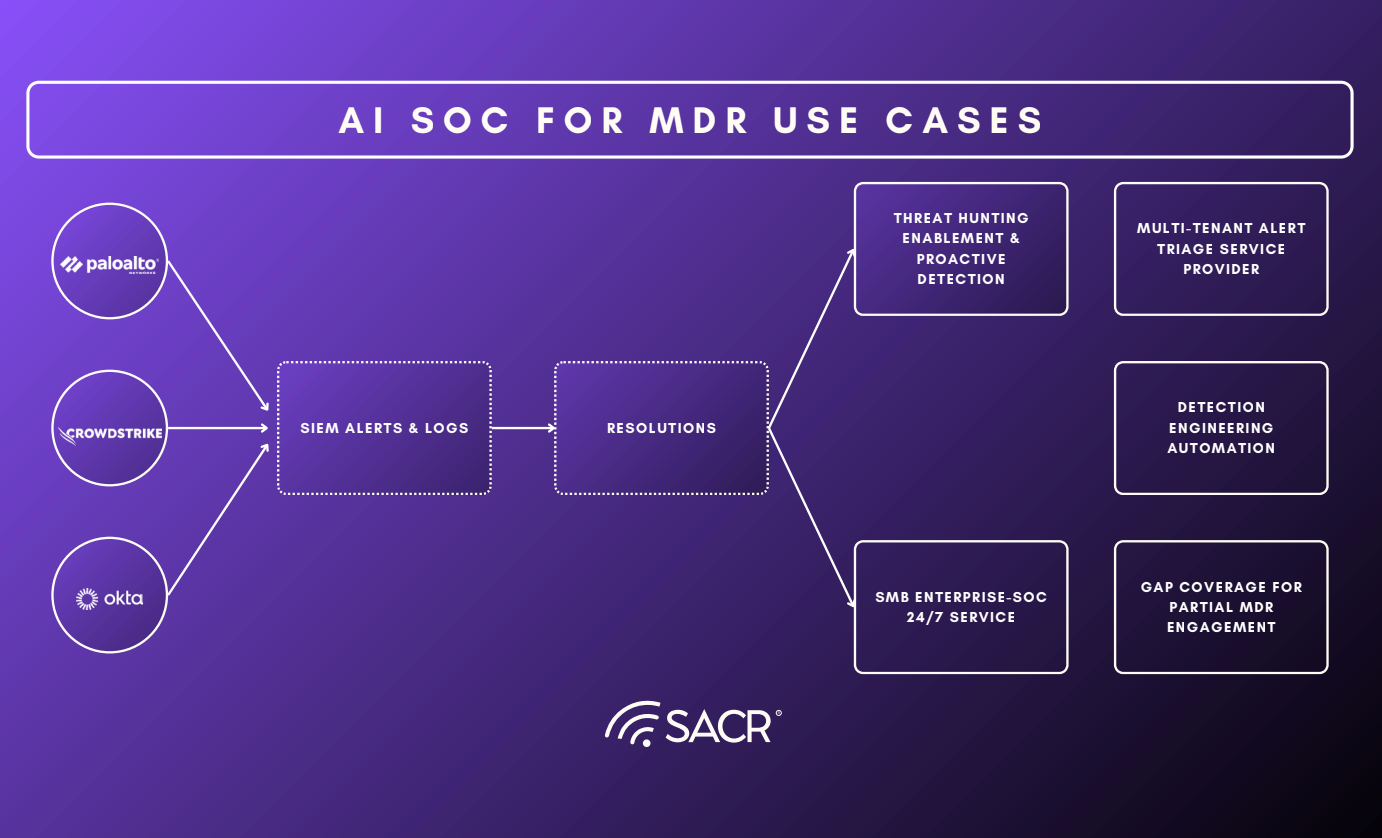
AISOC for MDR applies advanced AI (including agentic automation and LLM-driven reasoning) across the SOC lifecycle:
- detection and enrichment
- triage and prioritization
- investigation and hypothesis testing
- response recommendations and playbook execution
- documentation, explainability, and audit trails
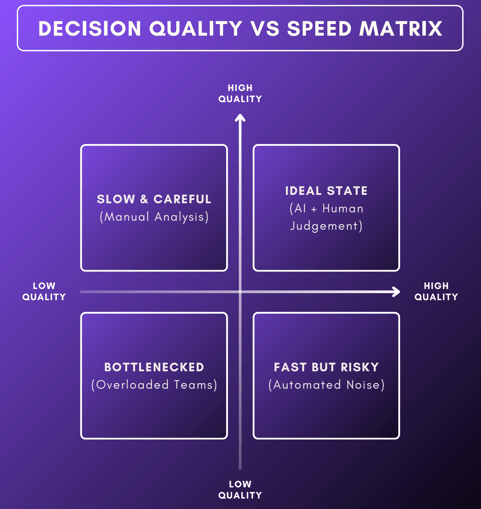
The key shift is machine-led investigation.
Instead of using automation to assist analysts, the AI system does the investigative work directly:
- gathers context across telemetry sources
- correlates identity, endpoint, cloud, SaaS, and network activity
- tests hypotheses deterministically
- reaches a conclusion with supporting evidence
- escalates to humans when confidence is low or risk is high
When done right, AISOC changes both outcomes and economics:
- investigations no longer depend on how many analysts are on shift
- decision quality becomes consistent and repeatable
- response speed improves because investigations are completed in minutes, not hours
- humans focus on judgment, accountability, and approvals
This is the operating model AirMDR is built for.
AI-Led MDR and an AI SOC Platform
Most vendors force you into one of two paths:
- Buy a platform and run it yourself
- Outsource outcomes to an MDR provider
AirMDR supports both models:
- AI SOC platform for organizations that want to keep operations in-house
- AI-native 24/7 MDR service for organizations that want full coverage without running a SOC
This dual go-to-market matters because the market is splitting:
- Enterprises tend to adopt AI as augmentation, with human decision authority
- Mid-market and SMBs tend to adopt AI-native MDR to transfer accountability and get 24/7 outcomes immediately
AirMDR meets both where they are—without forcing a single operating philosophy.
Fast, Consistent, Transparent Case Quality
For security operations using MDR the biggest gaps come from case quality you can trust and transparency because you can see the work. This includes:
1) 24/7 coverage without human fatigue
AirMDR’s AI-native analysts handle the vast majority of alerts—often cited as only ~3% requiring human touch in the service model—enabling scale without degrading quality.
2) Investigations in minutes, not hours
AirMDR emphasizes automated playbooks that execute in under 5 minutes, compared to hour-long (or longer) manual investigations.
3) A non–black box MDR experience
Every case includes:
- the alert and the associated evidence
- investigation steps taken
- data sources used
- reasoning and conclusions
- consistent documentation for audit and learning
For buyers burned by opaque MDR escalations, this is huge. It turns MDR from “trust us” into “review us.”
Modern MDR With AI-SOC Architecture: Designed for Modern Telemetry (Without Over-Engineering)
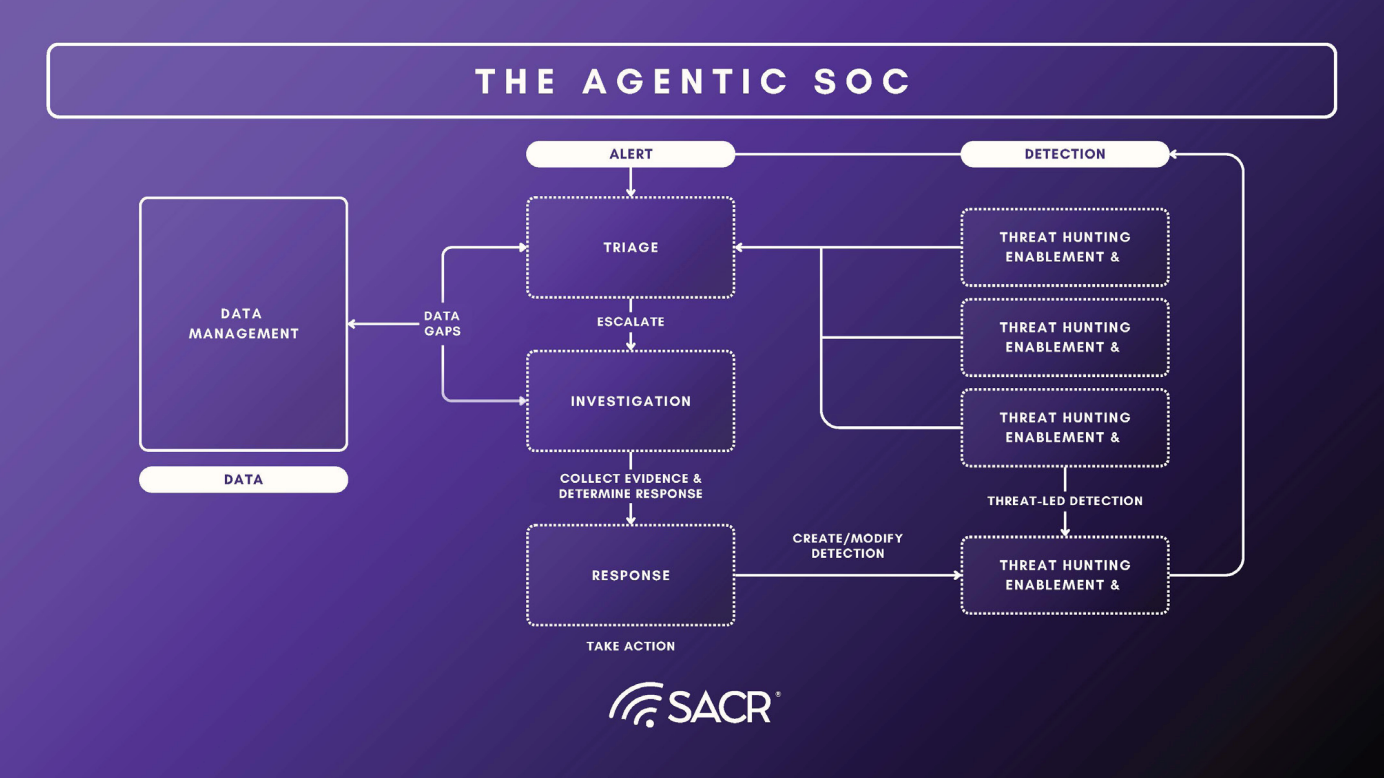
Modern MDR with AI-SOC Architecture supports SaaS deployment, with an optional remote agent for on-prem collection and response.
Where it shines is in practical integration breadth across the sources SOC teams live in:
- SaaS applications (e.g., Okta, Azure, others)
- SIEM integrations (rules + raw log data)
- EDR telemetry
- network data (including VPC flow logs)
- cloud audit logs (AWS CloudTrail, Azure Activity Logs, GCP Audit Logs)
- email security signals
- identity providers (auth and access activity)
This breadth matters because many mid-market teams don’t have the engineering capacity to stitch together 15–30 tools into a coherent investigation workflow.
AirMDR’s approach is: connect what you already have, correlate across it, and make the outcome reviewable.
What to Watch For When Considering Modern MDRs
What to
Top strengths
- Dual model flexibility (AI MDR service + AI SOC platform)
- Integration breadth across modern environments
- Speed + transparency that improves trust, validation, and compliance readiness
Areas to watch
SaaS-first approach may be limiting for organizations that require full self-hosted deployment. And while AirMDR is strong on operational triage, investigation, and response recommendations, some buyers may want deeper out-of-the-box cloud-native detection libraries and advanced detection engineering depth (often addressed via add-ons or adjacent tooling).
What CISOs Should Take Away (If You’re Evaluating AirMDR)
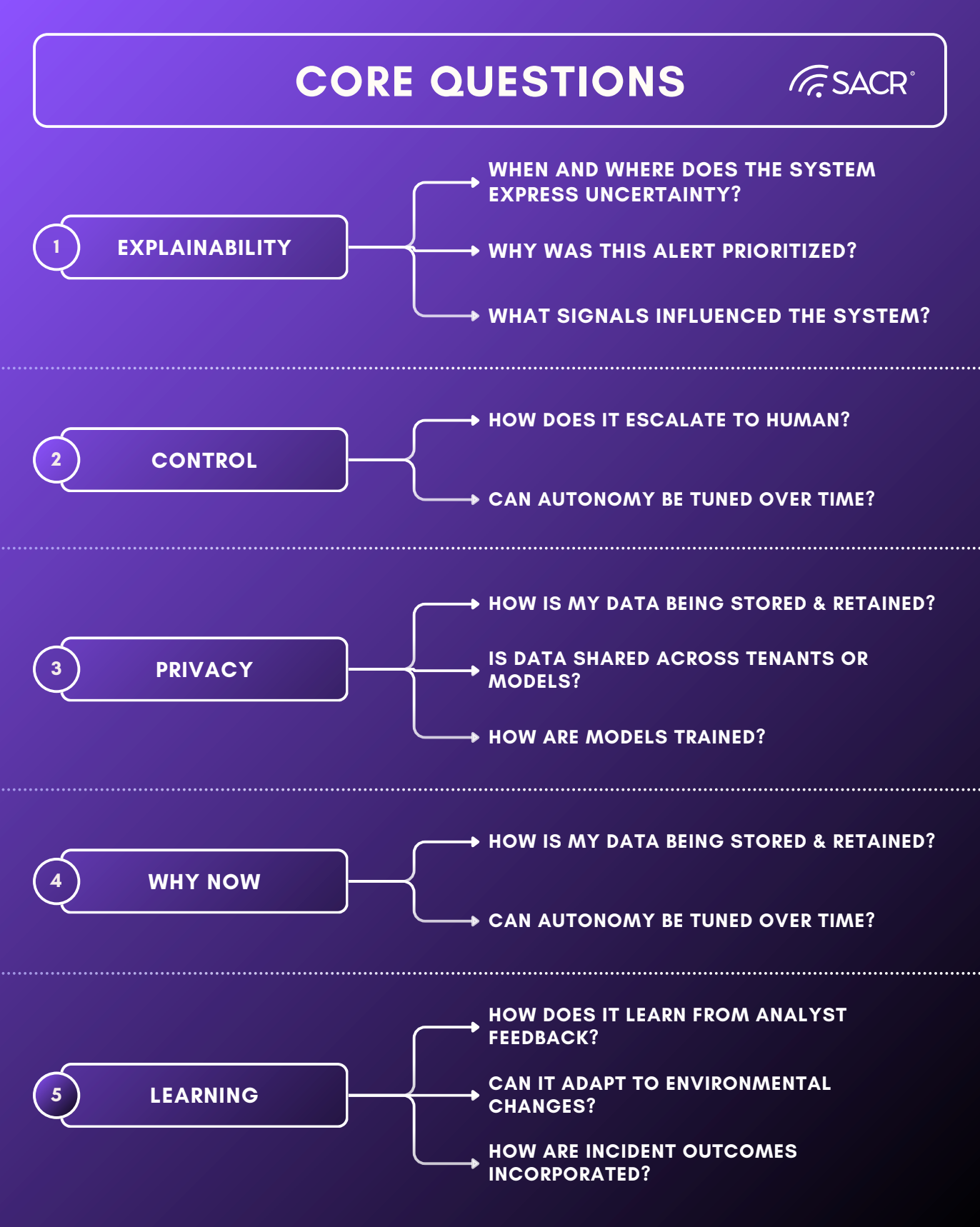
If you’re considering AI-native MDR, the questions that matter aren’t “does it use AI?”
They’re ownership and governance questions:
- How does it explain reasoning and show uncertainty?
- When does it escalate to humans?
- What response actions are automated vs approved?
- How is data stored, retained, and isolated?
- How does the system learn from outcomes and feedback?
AirMDR’s philosophy is aligned with what security leaders actually need:
AI handles volume and repetition. Humans handle judgment and accountability.
And the entire system stays transparent enough to audit and trust.
.
Bottom Line: AirMDR Represents the Direction MDR Is Going
The future of MDR isn’t “lights-out SOC.” And it’s not “all humans forever.”
It’s a deliberate balance where:
- machine-led investigation removes the scaling bottleneck
- human oversight preserves accountability
- explainability turns AI from a black box into a defensible operating model
AirMDR’s bet is that Fortune 500-grade SOC outcomes shouldn’t require Fortune 500 budgets—and that the only way to deliver consistent, fast, high-quality MDR at scale is to rebuild around AI-native investigation with transparency at the core.
Want to learn more?
Watch our 2 Minute Demo Video (Security Operations Like You've Never Seen Before) >>
Like What You See? Have Questions About AI-SOC and MDR? We'll be Happy to Answer Any You Have:
In this article